 11
A home workspace should help you feel comfortable, focused, and ready to begin your day. It does not need to be large or expensive. With a few thoughtful choices, you can create a space that feels calm, organized, and separate from the distractions of the rest of your home.
Whether you work from home full time, study occasionally, or simply need a place to manage household tasks, a relaxing workspace can make daily routines easier. The key is to balance comfort, function, and personal style.
Start by looking at how your home is used throughout the day. A quiet corner of a bedroom, living room, dining area, or spare room can become a practical workspace. You do not need a dedicated office if you can create a clear boundary around your work area.
Consider these factors when choosing a location:
– Natural light: A window can make the space feel brighter and more pleasant.
– Noise levels: Choose an area away from televisions, busy hallways, and frequent foot traffic.
– Available outlets: Make sure your computer, lamp, and other essentials can be plugged in safely.
– Background activity: Avoid placing your desk where household movement will constantly interrupt you.
– Space for movement: Leave enough room to stand, stretch, and adjust your chair.
If you share your home with other people, let them know when the space is being used for focused work. Even a small visual signal, such as closing a door or placing a desk sign nearby, can help create a sense of separation.
Comfort is one of the most important parts of a relaxing workspace. A beautiful desk is less useful if it is too high, too low, or too small for your daily tasks.
Choose a desk that gives you enough room for your computer, notebook, water bottle, and any tools you use regularly. Keeping a little open space can make the area feel less crowded.
Your chair should allow you to sit comfortably while keeping your feet supported. Look for a chair with:
– A seat that feels comfortable for extended periods
– Back support
– Adjustable height, if possible
– Enough room to change sitting positions
– A stable base
Arrange your screen so you can view it without constantly looking down or twisting your neck. Keep your keyboard and mouse close enough that your shoulders can remain relaxed. Small adjustments to furniture placement can make a noticeable difference in how the space feels.
Good lighting can improve the atmosphere of a workspace and make tasks easier to complete. Whenever possible, place your desk near a window, but avoid positioning the screen directly in front of or behind bright sunlight. Glare can be distracting.
Add a desk lamp for cloudy days, evenings, or areas with limited natural light. A lamp with a soft, warm glow can make the workspace feel inviting. If you read printed materials or write often, choose a lamp that provides enough light for the task without creating harsh shadows.
You can also layer different sources of light:
– Natural light during the day
– A desk lamp for focused tasks
– A floor or wall lamp for general room lighting
– Small accent lights for a gentle evening atmosphere
Keep cords tidy and make sure lamps are placed where they will not be knocked over. A well-lit workspace should feel comfortable rather than overly bright.
Clutter can make it harder to relax and focus. You do not have to remove everything from your desk, but each item should have a clear purpose or place.
Begin by removing objects you rarely use. Then group the items you need most often, such as pens, notebooks, chargers, and headphones. Use a small tray, cup, drawer organizer, or box to keep these supplies together.
Try these simple organization habits:
– Keep only current projects on the desk.
– Store extra supplies in a drawer or nearby cabinet.
– Use cable clips or ties to keep cords from spreading across the surface.
– Create a designated place for incoming papers.
– Clear the desk at the end of the day.
A clean desk does not need to look empty. A few useful and attractive items can make the area feel personal without becoming distracting.
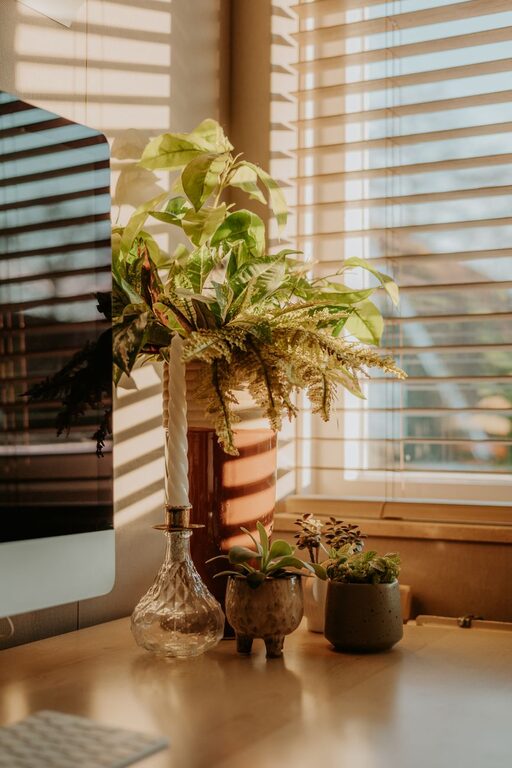
Natural details can make a workspace feel calmer and more welcoming. A small houseplant, vase of flowers, wooden accessory, or bowl of stones can add visual warmth.
If you choose a plant, select one that suits the amount of light available and the care you are willing to provide. A low-maintenance plant can be a good option for a busy schedule. Even a small leafy plant on a shelf can make a noticeable difference.
Other natural touches include:
– A woven basket for storage
– A corkboard for notes
– A wooden desk tray
– Landscape artwork
– A view of greenery
– Natural fabrics on a nearby chair or cushion
Keep decorations simple so they support the mood of the room rather than compete with your work.
Color can influence how a space feels. Soft neutrals, gentle greens, muted blues, warm whites, and light earth tones often create a peaceful background. You can also use colors that make you feel comfortable and energized.
If you prefer a more colorful workspace, choose one main accent color and repeat it in small details, such as a notebook, artwork, or desk accessory. This creates a coordinated look without making the space feel busy.
Textures can also add comfort. Consider a soft rug, fabric chair cushion, woven storage basket, or simple curtain. These details help make the area feel less formal and more connected to the rest of your home.
A relaxing workspace should reflect your personality. Add a few meaningful items, such as a framed photograph, favorite print, small collection, or inspirational object. Personal details can make the area feel inviting and encourage you to spend time there.
However, too many decorations may become a source of distraction. As a general guide, choose items that are either useful, calming, or genuinely meaningful. If something does not serve one of those purposes, consider moving it elsewhere.
You might also create a small “focus zone” on the desk. Keep this area reserved for the tools you use during important tasks. A notebook, timer, cup of tea, or simple desk mat can help signal that it is time to begin.
A relaxing workspace is not only about appearance. The sounds and notifications around you can also affect your ability to concentrate.
If possible, silence nonessential notifications on your computer and phone. Keep your phone out of reach during tasks that require attention. Use headphones, quiet background music, or natural sounds if they help you work comfortably.
You can also reduce visual distractions by keeping unrelated items outside the workspace. A basket near the desk can collect objects that need to be put away later, allowing you to tidy the room quickly without interrupting your work.
Small routines can make your workspace feel more peaceful and predictable. At the beginning of the day, open a curtain, turn on a lamp, fill your water bottle, and write down the most important tasks.
At the end of the work period, save your files, clear the surface, and put supplies back in place. This short reset helps mark the transition between work and personal time.
Include regular breaks, especially when working for long periods. Stand up, stretch, look away from the screen, or walk to another room. A few minutes away can help you return with a clearer mind.
The most relaxing home workspace is one that fits your habits, home, and daily needs. Begin with the basics: a suitable location, comfortable furniture, good lighting, and simple organization. Then add personal touches gradually.
You do not need to complete a major makeover. Moving a desk closer to natural light, clearing unnecessary items, or adding a small plant may be enough to change the atmosphere. By creating a space that feels calm and practical, you can make everyday work more comfortable and enjoyable.