 11
A small kitchen can be just as useful as a large one when it is equipped with the right tools. The key is to choose items that serve more than one purpose, fit easily into cabinets or drawers, and make everyday cooking faster and more comfortable.
You do not need a large collection of gadgets. A carefully selected set of reliable tools can help you prepare breakfast, cook dinner, bake simple treats, and clean up without filling every available surface. Here are the essential tools worth considering for a compact kitchen.
A chef’s knife is one of the most useful tools in any kitchen. It can slice vegetables, chop herbs, cut meat, and prepare many other ingredients. Instead of buying a large knife set, start with one comfortable, well-made chef’s knife.
Choose a knife that feels balanced in your hand and has a blade length that suits your cooking style. An eight-inch blade is a practical choice for many home cooks, but a smaller knife may feel easier to control in a compact kitchen.
To keep it in good condition:
– Store it in a knife block, blade guard, or wall-mounted holder.
– Wash it by hand and dry it promptly.
– Use a cutting board rather than a countertop.
– Sharpen it regularly with a suitable sharpener or honing tool.
A small paring knife is also useful for peeling, trimming, and handling small ingredients.
A cutting board protects your counters and gives you a stable surface for food preparation. In a small kitchen, choose a board that is large enough for comfortable chopping but easy to store.
A board with a handle or a hanging hole can be stored on a wall or inside a narrow cabinet. Some boards are reversible, allowing you to use one side for produce and the other for other ingredients.
Look for a board that is:
– Easy to clean
– Resistant to slipping
– Large enough for everyday tasks
– Durable without being overly heavy
If space is very limited, a thin, flexible cutting mat can provide an additional prep surface and roll away when not in use.
Accurate measurements are helpful for both cooking and baking. Nesting measuring cups and spoons take up much less room than separate tools scattered through a drawer.
Choose a set with clear markings and a connected ring or compact storage design. Stainless steel models are durable, while plastic sets are often lightweight and affordable.
Keep measuring tools near your preparation area so they are easy to reach. You may also want a liquid measuring cup with a spout for water, milk, oil, and other liquids.
Mixing bowls are useful for combining ingredients, washing produce, serving salads, and storing leftovers. A nesting set is especially helpful in a small kitchen because the bowls fit inside one another.
A practical set usually includes at least three sizes:
– A small bowl for sauces or chopped ingredients
– A medium bowl for mixing
– A large bowl for salads, dough, or meal preparation
Stainless steel bowls are lightweight and durable. Glass bowls can double as serving dishes, while plastic bowls are often easy to store and handle.
You may not need several specialized pans. A deep skillet or sauté pan can often handle many everyday meals, including stir-fries, pasta sauces, vegetables, eggs, and one-pan dinners.
Choose a pan with a sturdy handle and a lid if possible. A lid helps retain heat, reduce splatters, and make cooking more efficient. A pan with a wide base provides useful cooking space without taking up more storage than a standard frying pan.
If you enjoy making soups or larger meals, add a medium saucepan. A saucepan can boil grains, warm sauces, cook oatmeal, and prepare small portions of soup.
A baking sheet is useful for roasting vegetables, baking cookies, reheating food, and preparing simple sheet-pan meals. If your oven is small, check its dimensions before buying one.
A rimmed baking sheet is more versatile than a completely flat tray because the raised edges help contain oil, juices, and smaller ingredients. Choose a sturdy model that will not bend easily under heat.
You can make the most of a baking sheet by using it for:
– Roasted vegetables
– Toasted nuts
– Baked fish or chicken
– Homemade granola
– Quick breakfast items
Store it vertically alongside cutting boards or trays to save cabinet space.
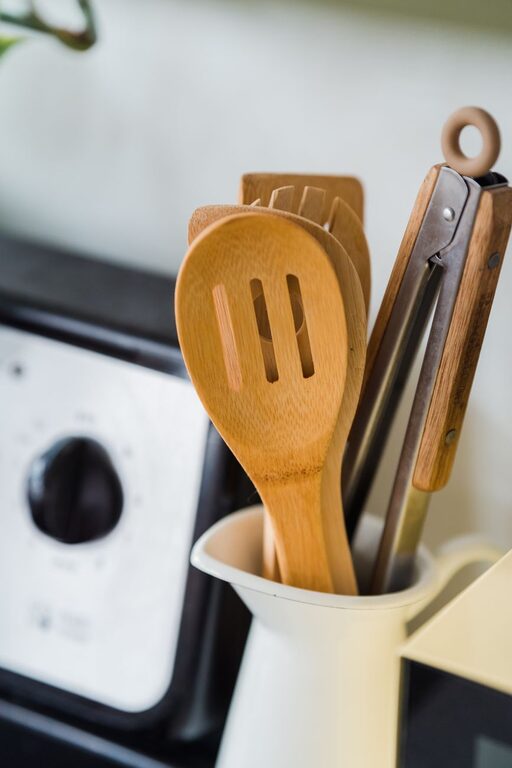
A few basic utensils can cover most cooking tasks. A heat-resistant silicone spatula is useful for stirring, scraping bowls, folding ingredients, and turning soft foods. A wooden or silicone cooking spoon works well for soups, sauces, and grains.
A slotted turner is helpful for lifting fried eggs, pancakes, vegetables, and other foods from a pan. Look for utensils with compact handles or hanging holes so they can be stored on a rail or inside a narrow container.
Avoid collecting multiple versions of the same utensil unless you use them regularly. In a small kitchen, every tool should earn its storage space.
A box grater can shred cheese, grate vegetables, zest citrus, and create fine crumbs. It offers several surfaces in one tool, making it more practical than buying separate graters.
If a box grater is too large for your drawer, a flat handheld grater may be a better option. Choose one with a comfortable handle and a surface that is easy to rinse clean.
A grater is particularly useful for adding fresh ingredients to pasta, salads, sandwiches, soups, and baked dishes.
Kitchen shears are a convenient alternative to a knife for many small tasks. They can trim herbs, cut parchment paper, open food packages, and divide certain foods into smaller pieces.
Look for shears that separate for thorough cleaning. Keep them in a drawer rather than using them for general household tasks, which helps maintain cleanliness and sharpness.
Good storage containers help reduce waste and keep a small kitchen organized. Choose a stackable set with matching lids so containers use vertical space efficiently.
Clear containers make it easier to see what you have, while square or rectangular shapes usually fit cabinets and refrigerators better than round ones. A few different sizes are more useful than a large collection of nearly identical containers.
Useful storage items include:
– Small containers for sauces and leftovers
– Medium containers for prepared ingredients
– One or two larger containers for meal portions
– Reusable bags for dry goods or snacks
Labeling containers with dates can also make the refrigerator easier to manage.
The best small-kitchen tools are versatile, easy to clean, and simple to store. Before buying a new gadget, ask whether it solves a regular problem and whether an existing tool can do the same job.
Use vertical storage whenever possible. Wall rails, magnetic holders, shelf risers, and narrow drawer organizers can free up valuable counter and cabinet space. Keep frequently used tools within easy reach and store occasional items higher or farther back.
A small kitchen does not need to feel limiting. With a sharp knife, dependable cookware, compact measuring tools, and an organized storage system, you can prepare a wide range of meals while keeping your space clear and practical.